Guide · Used cars
Buying a used electric car in Switzerland: the checklist in six points
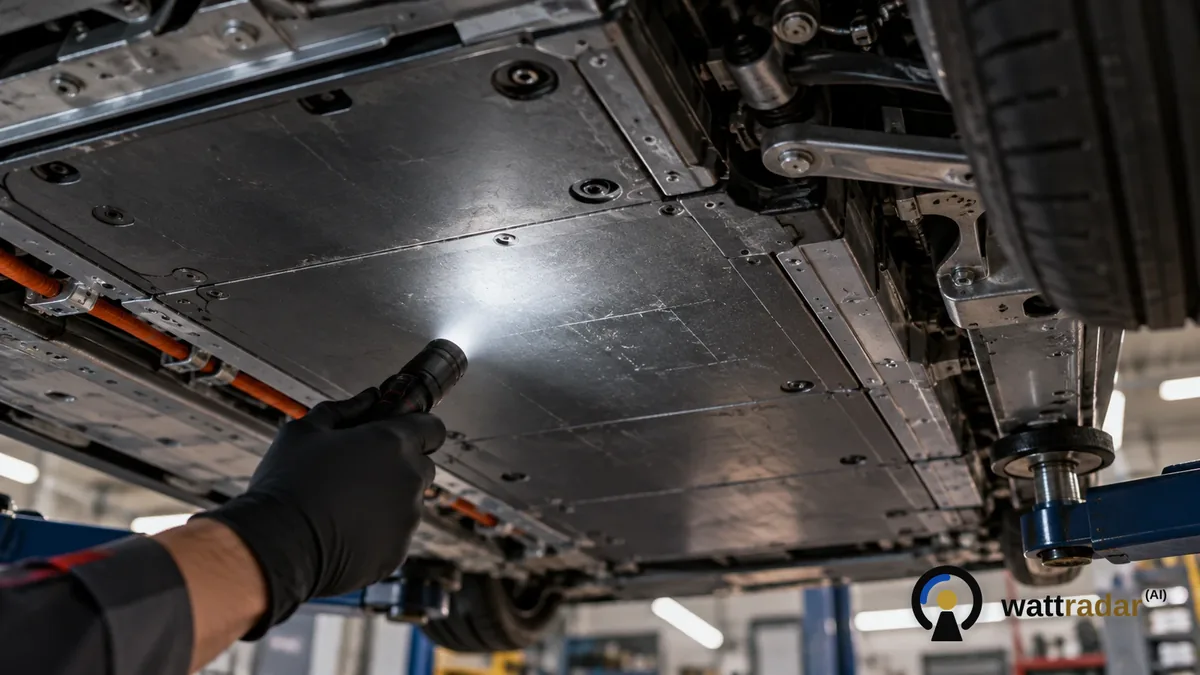
In a used electric car most of the value sits in the battery, and from the outside you cannot see it. The following list goes through six points to settle before you sign. For each it says which figure we have and where the calculation is open.
1. Compare age and kilometres with the typical condition
The AGVS has evaluated 677 battery tests from Swiss garages. The median is 98,3 per cent of the original capacity for vehicles of one to two years and 94 per cent for vehicles of five to six years. That is 4,3 points in four years, about 1,1 points a year; the calculation rests on 543 tests. A car clearly below that in its age class is no reason to rule it out, but it is a question for the seller: how was it charged, how was the value measured, what does a second method show?
The evaluation knows age classes and mileages, not brands. How fast the battery of your preferred model ages, it does not say. The classes, the spread and the difference between the test methods are on the data page that the Battery tab explains.
2. Have the condition measured independently
A figure from the seller or from the advert is one the seller has chosen. A certificate from a testing body you obtain yourself. The prices, the differences between the flash test and the premium test and the question whether you can read the value yourself are in the article on the battery check. EnergieSchweiz lists the topic in its Roadmap Electromobility under battery certificate for used EVs, and the TCS describes its battery test with procedure and price. The test measures capacity and cells. It does not check housing, seals, sensors or cables.
3. Work out the remaining manufacturer warranty
The warranty counts from first registration. With a term of eight years a five-year-old car has three left, and the kilometre limit runs in parallel. We read the terms of the importers for the fifteen largest brands in the plug-in market: ten of the fifteen state eight years or 160’000 kilometres, whichever comes first, and a guaranteed residual capacity of 70 per cent. The line for the brand of your car is in the article on the battery warranty.
Two things you settle in writing with the importer or dealer: whether the warranty stays in place when the keeper changes, and which service records it requires. The terms regulate both differently for each brand, and we have not evaluated them for all fifteen.
4. Know where the car comes from
Some used cars were first registered abroad and imported. The Swiss importers are separate legal entities with their own terms. For an imported car you therefore ask before buying which warranty applies in Switzerland and who handles it. How large used imports are and which brands carry them is calculated in the article on used imports.
5. Measure the price against depreciation
The price of a used car follows depreciation, whose steepest part falls in the first years. Which time of purchase pays off under which calculation is shown in the article on depreciation. The Used or new tab sets new cars against used ones with your assumptions, and the Total cost tab calculates the holding period.
6. Include the running costs
Each canton sets its own motor vehicle tax, and it differs greatly for electric cars; the overview is in the article on motor vehicle tax. Then there is electricity. Whether you can charge at home decides the annual cost more than the model; more in the article on the EV without your own wallbox.
What we do not know
- How the battery of your model ages. The AGVS evaluation lists classes by age and mileage, but no brands and no models.
- How the battery of one particular car was used before. Share of fast charging and charging habits are in no open source and appear in a certificate only indirectly.
What this means for a purchase
- Compare the condition with the median of the age class. A clear deviation is a question for the seller.
- Get the certificate yourself. It is made before you sign, at a body that earns nothing from the sale.
- Work out the remaining warranty. First registration, years, kilometre limit and the brand’s threshold belong together.
- Ask about the Swiss warranty for imports. In writing and before buying.
Sources: AGVS evaluation of the battery tests, received on 16.09.2026 (Auto Gewerbe Verband Schweiz, SOHC database); warranty terms of the Swiss importers, filed with address and retrieval date in batteriegarantie.json ↗; EnergieSchweiz, Roadmap Electromobility; TCS, EV battery test.
Transparency: The median and the loss rate per year are calculated from the age classes that carry at least 60 tests and start at one year; the class of new cars drops out because a warranty claim with 5 per cent distorts it. The remaining warranty applies to the terms for new cars of the Swiss importers. Every figure in this article is recalculated automatically on every change and searched for in the text, in all four languages.
